
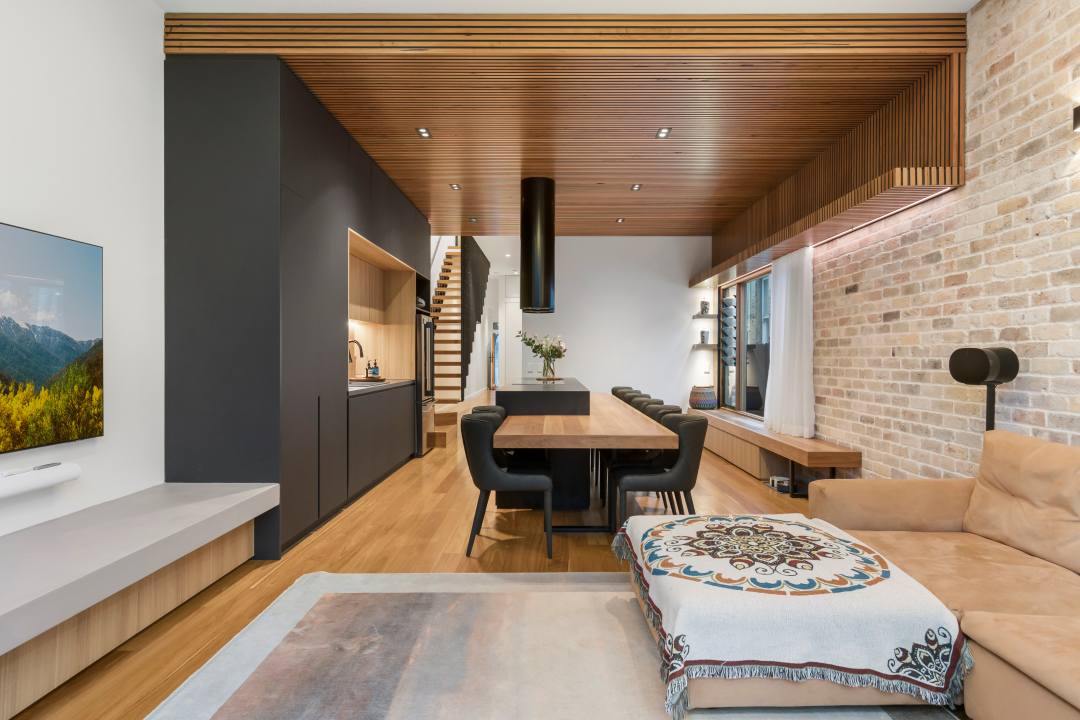
When it comes to building and renovating your home, the devil is in the details. Often, seemingly minor features get overlooked, and although it feels like a non-issue at the time, eventually, the lack of these small additions becomes a daily annoyance.
But what if there was a way to avoid that headache? Join Sydney Home Design + Living’s Stef Grinberg as she chats to Ross Cummings, director of Braeside Group Sydney, to discuss the need for precision and custom elements within the building process.
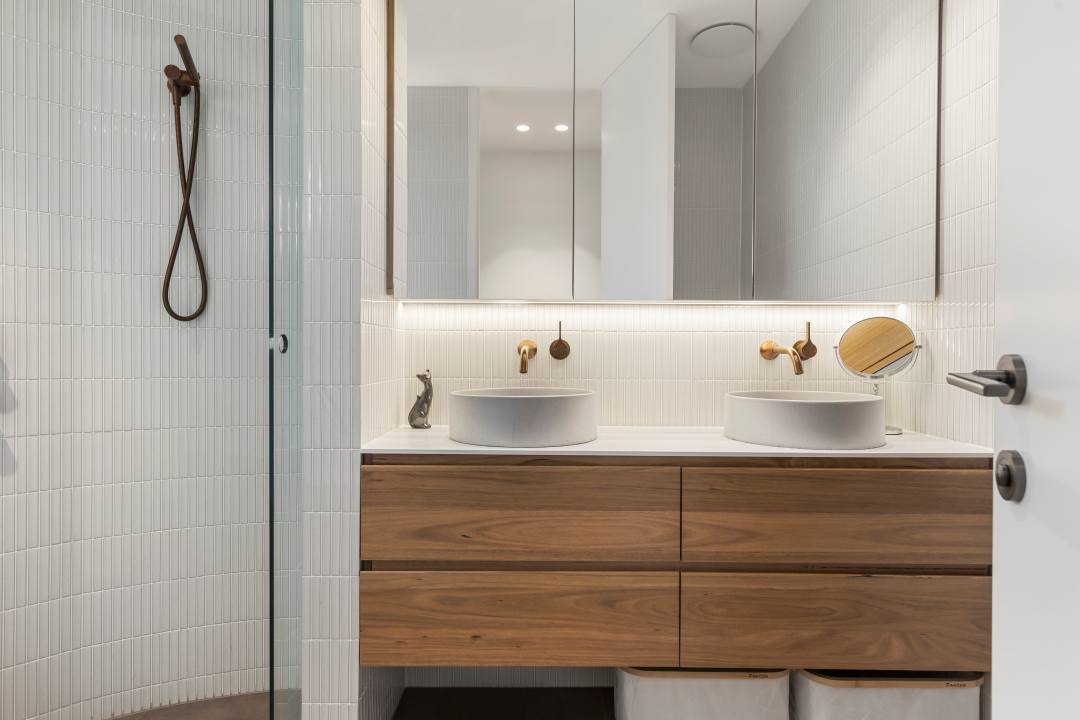
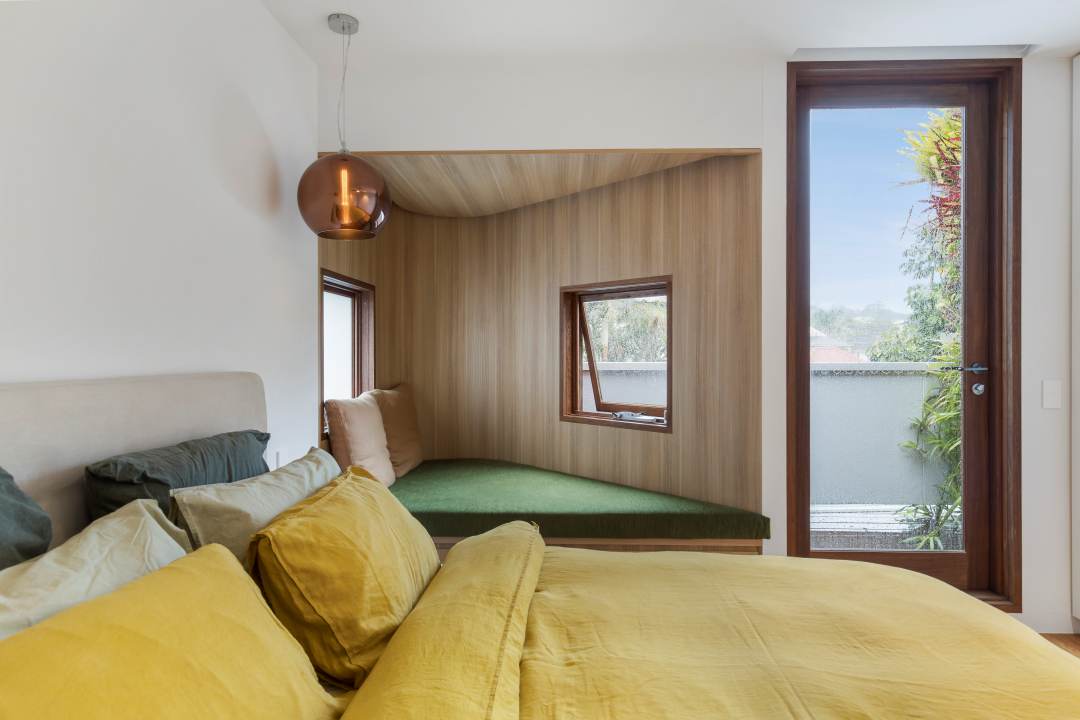
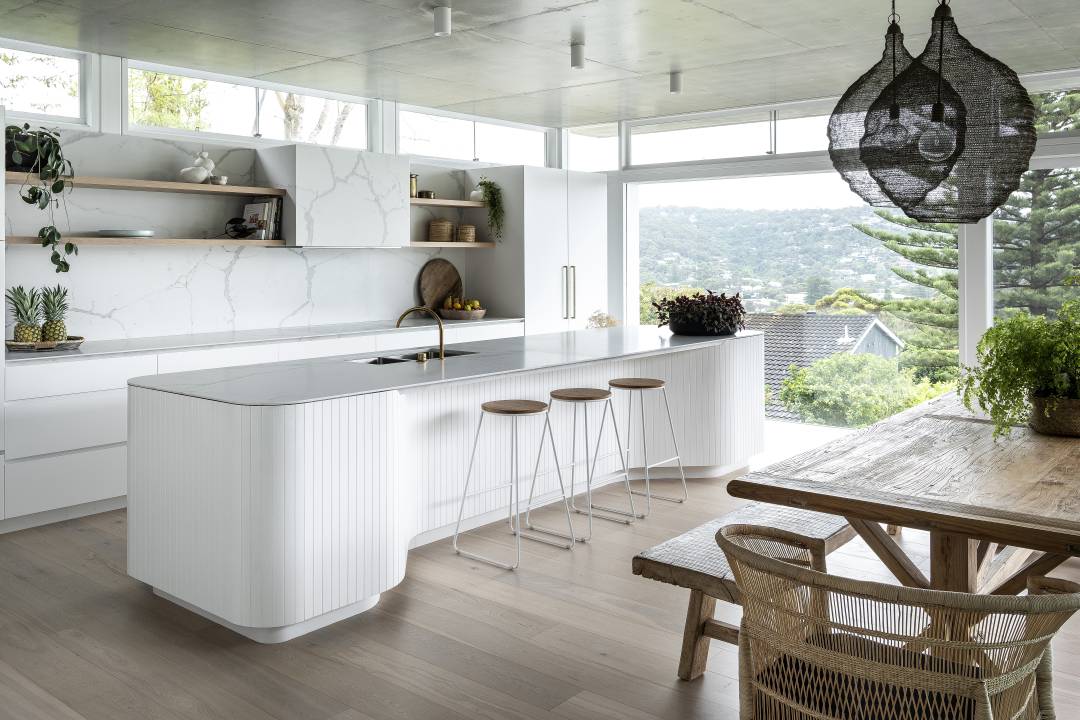
When combined, Braeside Building, Joinery and Bathroom make up the Braeside Group. ‘Braeside’ is named after the area in Scotland Cummings grew up in. First immigrating to Australia in early 2009 with his wife, he first worked at Paul King Pty Ltd, (now Kinn Constructions), where he was mentored by Paul King, who taught him about the industry, service and clients.
It was during these six years working for King where Cummings met Ena and Keith, a couple that would impact his life more than he knew at the time. First starting as his clients, the pair later became much more than that.
“They [Ena and Keith] were like grandparents to me and my wife here … we were over here on our own,” he said.
Cummings credits the name of his company to the couple, stating that “she [Ena] brought me back to my roots.” Another nod to his Scottish roots is that Ross Cummings is ‘Scottish Elvis’ in his spare time, proudly performing in tartan when he’s off the clock.
LET’S GO BACK TO THE BEGINNING.
Cummings started young in the construction industry. At 16 he worked as an apprentice at Newark Joiners. At the time, the company partnered with Ferguson Marine, a Scottish shipyard and the only producer of non-military vessels in the area. “We did a lot of work outside of the shipyard as well, so, I learned carpentry and joinery at a very young age,” he said. “I travelled into Europe … all around Scotland, working and learning, which was unbelievable. I was very lucky to have had an apprenticeship like that.”
Cummings stayed at Newark Joiners for a few years before opening his own small business in Scotland. This unique entryway into the industry would shape how he goes about his work, as this is the foundation of his craft.
THE PROBLEM (AND THE SOLUTION)
In Scotland, joinery and carpentry fall under the work of the same contractors, meaning that most – if not all – construction workers are also joiners. In contrast to this, Australia treats joinery and carpentry as two separate industries, creating disconnect and unique challenges according to Cummings.
This difference in industry means that some integral details of the project, including the scheduling, idea stage and ongoing communication suffers. With third party joiners requiring an extra step, more interaction, more time management and even additional costs for any changes made. Cummings understandably doesn’t “enjoy the headache,” preferring an in-house approach to joinery production.
“The benefit of having all the joinery done in house is we can make sure everything works to our construction schedules … that’s the problem with builders and joiners, they’re both running two different schedules and often there’s not much communication between them,” he explains.
With an in-house approach, he explains that the team “can manage the margins and make sure it’s more cost efficient for clients and us,” ensuring clarity, fast changes and efficiently with in-house joinery. With a background in both building and cabinetry, Cummings has a direct understanding of each moving part of the construction process.
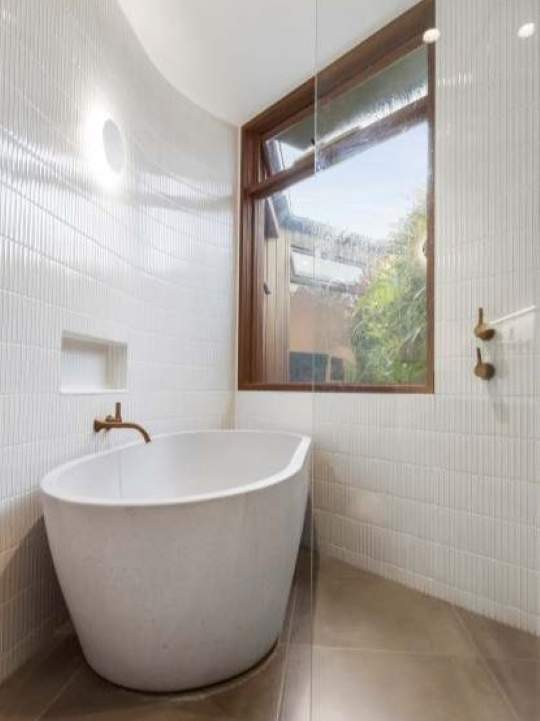
WHY CUSTOM JOINERY MAKES ALL THE DIFFERENCE
What is joinery? Why does it matter?
“What makes a house is the joinery,” Cummings said.
“This is what a lot of people don’t quite understand, joinery is made around your lifestyle and how you’re going to live.”
It’s the small details in the kitchen cabinetry, the vanity and the wardrobe, it’s the little things that you don’t inherently notice unless they’re not quite right. These seemingly small parts of our lives have a larger impact than we realise. With joinery acting as the tool to enhance existing elements and adapt them, “that’s why it’s important to have a really good design … [that] ticks all the boxes of your day-to-day life,” he said.
One unexpected outcome of Cummings’ background …besides being an accomplished Scottish Elvis impersonator, is the ability to work with complex design briefs, buildings and floorplans. An example of this is apartments, with walls that can’t be moved and structural elements that can’t be changed.
The first step is to ask yourself questions on how you live. Joinery is incredibly individualistic, and as such, it’s integral to approach the joinery process as something that is tailored to you.
For example, do you reach for a door or a draw in your bathroom vanity? How do you like your wardrobe laid out?
“There are so many different elements to joinery, and it’s designed around people’s lifestyles. If it’s designed properly, it’s designed around the way you live” he said.
Most notably, Cummings would say the most important aspect of the building and joinery process is design. He says it is important to create a plan before beginning a project, ensuring that client, builder and designer all stay aligned on the vision.
“Design negates ambiguity … because everybody has a different perception in how something should be done … 10 people would look at something, and they would all come up with 10 different solutions … get a good design, put it on paper and everybody can work off of it,” he concludes.
Images courtesy of Braeside Group Sydney